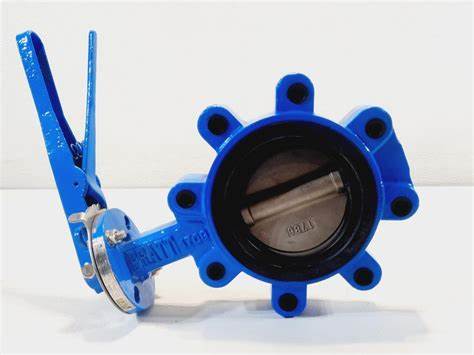
Butterfly Valves — Wafer, Lug & Actuated Isolation Valves
Butterfly valves isolate large commercial water lines in a compact quarter-turn body. PVFPro stocks wafer, lug, and actuated butterfly valves from Red-White, Legend, Apollo, SMP, and Pratt — ready to ship from multiple U.S. warehouses.
What Is a Butterfly Valve?
A butterfly valve isolates or regulates flow with a disc that rotates on a shaft across the bore — quarter-turn like a ball valve, but in a short, light, wafer-thin body. At large pipe sizes it replaces gate and ball valves at a fraction of the weight, face-to-face, and cost, which is why butterfly valves dominate HVAC water distribution, municipal and process water isolation. PVFPro stocks butterfly valves from Red-White, Legend, Apollo, SMP, and Pratt, including actuated configurations.
Wafer vs Lug Butterfly Valves
-
Wafer — The body sandwiches between two flanges with long bolts running through. Compact and economical; the piping must be drained and separated to remove the valve.
-
Lug — Threaded lugs accept bolts from each side, so an end flange can be dropped independently of the valve — the better choice at equipment connections that may need servicing.
Both styles seat a rubber liner (typically EPDM for water service or NBR for oil-bearing media) against a stainless or coated disc for tight shutoff. Lever handles cover small sizes; gear operators take over as size and torque grow, and actuated models — electric or pneumatic by series — automate large or hard-access lines.
Applications
- HVAC chilled and condenser water distribution — isolation at branches, risers, and equipment
- Pump suction and discharge isolation on large commercial systems
- Municipal and process water distribution
- Fire protection and standpipe supply piping (verify series suitability per listing)
- Balancing and flow regulation on water systems where a characterized disc is acceptable
- Tight-fitting mechanical rooms where the short body of a butterfly beats a gate valve
How to Choose the Right Butterfly Valve
-
Wafer or lug. Lug if either side may need to be unbolted independently; wafer for simple between-flange isolation.
-
Liner material. EPDM for water and steam-condensate service; NBR where oils or hydrocarbons are present. Match to media and temperature.
-
Operator. Lever to mid sizes, gear operator above that, actuated for automated or inaccessible locations.
-
Pressure class. Confirm the valve’s CWP rating against system pressure — each product page carries its rating block.
-
Isolation or regulation? Butterfly valves handle both shutoff and throttling service on compatible systems, though precise flow control calls for a balancing valve.
Technical Specifications Overview
-
Body styles stocked: Wafer and lug, plus actuated series.
-
Body/liner materials: Ductile and cast iron bodies with EPDM or NBR liners depending on series.
-
Disc materials: Stainless steel and coated discs by series.
-
Operators stocked: Lever, gear, and actuated configurations.
-
Ratings: Cold working pressure classes vary by series — confirm the rating block on each product page.
-
Brands stocked: Red-White Valve Corp., Legend Valve, Apollo, SMP, and Pratt.
Installation and Service Notes
Butterfly valves are forgiving to install but punishing to rush. Support the piping so the valve body is not carrying pipe weight. On wafer installs, center the valve carefully between flanges — an off-center disc scrapes the liner on every cycle — and torque flange bolts evenly in a cross pattern to the gasket maker's recommendation rather than crushing the liner with everything the wrench has. Leave the disc slightly open (a few degrees off seat) during flange bolt-up on resilient-seat valves where the series calls for it. After installation, cycle the valve once and check for rubbing or binding before insulating the assembly. For gear-operated valves, keep the position indicator legible from the floor — an operator who cannot tell open from closed has the wrong valve installed.
Frequently Asked Questions
-
Butterfly or gate valve on large lines? Butterfly: lighter, shorter, cheaper, faster to operate. Gate valves still win where a perfectly unobstructed full bore is non-negotiable.
-
Can butterfly valves throttle? Yes — the rotating disc is suited to modulation on water systems, though precise balancing is better left to a dedicated balancing valve.
-
What maintenance do they need? Seat and liner wear with cycling and abrasives; gear operators occasionally need lubrication. Plan for liner replacement on high-cycle installations.
-
Do you stock actuated butterfly valves? Yes — actuated series are stocked. For specific control-signal and torque requirements, contact us with your application details.
Why Buy Butterfly Valves from PVFPro
- In stock — fast shipping from multiple U.S. warehouses
- Five major brands including actuated configurations
- Real specification data on every product page
- Bulk and project pricing available — request a quote for mechanical-room packages
Supply House Counter Notes
Disc material tells you where a butterfly valve belongs: stainless and coated discs handle water service across the board; specialty disc and liner combinations exist for chemical and slurry duty — bring us the media sheet and we will match the series. For actuated valves, decide torque and fail position at order time (fail-open vs fail-closed changes what happens on a power loss, and that decision belongs to the system designer, not the installer). And when replacing an old gate valve on a large line with a butterfly, check the face-to-face: butterfly bodies run dramatically shorter, so spacer or flange adjustments are normal parts of the conversion, not surprises.
Related Collections