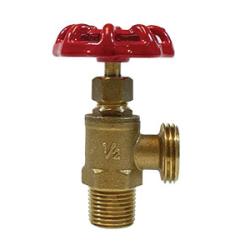
Boiler Drains — Water Heater & Boiler Drain Valves
Lead-free brass boiler drains for water heater and boiler service — quarter-turn and multi-turn, hose-thread outlets, from Legend and Red-White. In stock at PVFPro with fast U.S. shipping.
What Is a Boiler Drain?
A boiler drain is the low-point drain cock on a water heater, boiler, or hydronic system — a shutoff valve with a hose thread outlet so the system can be emptied to a drain or hose. It does double duty: routine draining for maintenance, and positive shutoff so the system holds between services. PVFPro stocks boiler drains from Legend Valve and Red-White Valve in lead-free brass, multi-turn and quarter-turn.
Applications
- Water heater drain connections — the standard drain point on tank service
- Boiler and hydronic system low-point drains for maintenance and repair
- Tankless installations paired with isolation kits (see our tankless valve kits)
- Expansion tank and air separator service drains
- Any low point on a water system needing a hose-threaded drain
How to Choose the Right Boiler Drain
-
Lead-free brass for potable systems. Water heaters and potable piping require compliant materials; the lead-free series carry NSF/ANSI 61 and 372 listings.
-
Quarter-turn or multi-turn. Quarter-turn drains open fast and seal with a ball; multi-turn drains are the economical standard with a replaceable washer.
-
Outlet and inlet threads. Hose-thread outlet with FNPT or sweat inlet depending on series — match the tank fitting or piping.
-
Handle clearance. Check the swing of the handle at the installed location — cramped water heater closets favor compact quarter-turn bodies.
-
Check the rating. Confirm the working pressure rating on the product page against system conditions.
Technical Specifications Overview
-
Materials: Lead-free brass bodies, by series.
-
Outlets: Standard garden-hose thread outlets.
-
Inlets stocked: Threaded FNPT and sweat connections depending on series.
-
Operation: Multi-turn and quarter-turn models stocked.
-
Certification: Lead-free series certified to NSF/ANSI 61 and 372 — confirm the listing block per product page.
-
Brands stocked: Legend Valve and Red-White Valve Corp.
Draining a Water Heater the Right Way
Draining a tank sounds simple; doing it wrong is how people get hurt and flood closets. Cut the power or gas first — an electric heater running dry cooks its elements in minutes. Shut the cold supply. Connect a hose to the drain outlet and run it to a floor drain or outside, then open a hot tap somewhere in the building to break vacuum so the tank actually flows. Open the drain and let it work. If the tank sits full of sediment, expect the drain to clog — that is the drain doing its filtering job on a neglected tank, and the fix is backflushing through the open drain, not pinballing the handle. When the tank is empty, close the drain before restoring supply, purge air through the open hot tap until water runs steady, and only then restore power or gas.
Frequently Asked Questions
-
My water heater drain drips — replace or repair? On washer-type drains, a worn seat washer is the usual cause and is replaceable. If the seat or body is corroded, replace the drain.
-
Can I use a boiler drain on a tankless heater? Tankless installs usually use isolation valve kits with integral drain/purge ports; a boiler drain still serves at tank units and system low points.
-
Quarter-turn or multi-turn for tank service? Both do the job; quarter-turn drains cycle faster and resist scale-seized packing on hard-water systems.
-
Do these work with wash-down hoses? Yes — standard hose thread outlets connect to any garden hose for draining and washdown duty.
Why Buy from PVFPro
- In stock — fast shipping from multiple U.S. warehouses
- Quarter-turn and multi-turn, threaded and sweat, in one place
- Specification data from manufacturer documents on every page
- Bulk pricing available for plumbing contractors
Supply House Counter Notes
The most common boiler-drain mistake is treating it like it is disposable: install a brass drain, never open it for years, then find it seized or weeping when the heater finally needs service. Cycle tank drains on every service visit — a drain that turns is a drain that works when the emergency hits. On hard-water systems, open the drain briefly at each water-heater flush to move sediment past the seat instead of letting it set into a plug. When you do replace one, match the inlet thread to the tank fitting exactly, and do not over-wrap sealant on a drain install — the threads are short and the excess ends up in the tank. For tank installations where space below is tight, the low-profile quarter-turn bodies save the knuckles every time. And on every drain you replace, hand the customer the maintenance note: cycle it at each flush, or the next service call starts with a stuck valve and a shop vacuum.
Related Collections